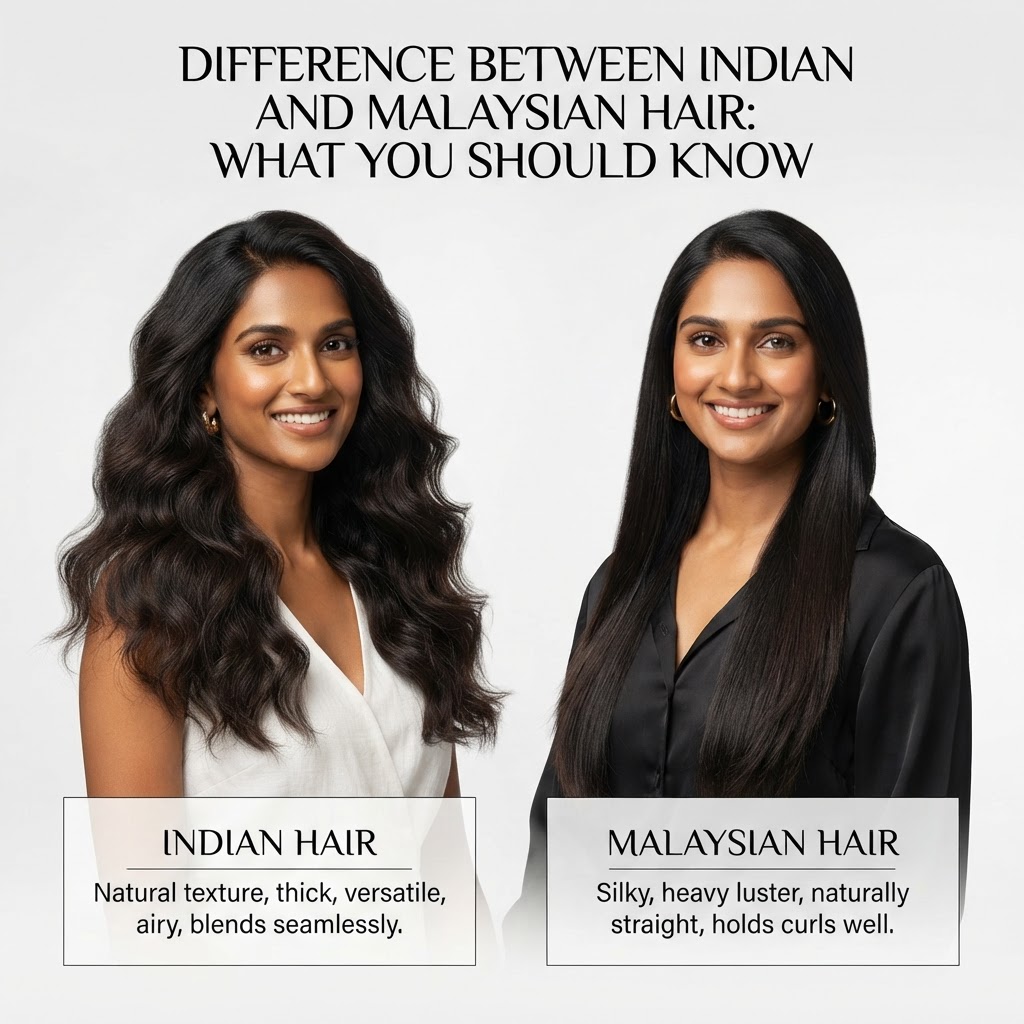
Introduction: Navigating the World of Hair Textures
When investing in high-quality human hair extensions or wigs, the terminology can be overwhelming. One of the most frequent dilemmas for hair enthusiasts is understanding the difference between Indian and Malaysian hair. While both are popular choices in the beauty market, they offer vastly different styling experiences, textures, and maintenance requirements.
At IndianHairStore.com, we pride ourselves on championing the authenticity and versatility of Indian Remy hair. However, it is our goal to provide you with an honest, balanced perspective. Whether you are looking for natural movement or a sleek, heavier aesthetic, understanding the origin and characteristics of your hair is the first step toward a perfect install.
If you are new to the world of premium hair, our Remy Hair Guide provides a comprehensive foundation for understanding how cuticle-aligned hair impacts your overall look. By the end of this guide, you will be equipped with the expert knowledge needed to distinguish between these two popular textures and make an informed purchase.
The Signature Quality of Indian Remy Hair
Indian hair is widely considered the gold standard in the hair industry, primarily due to its natural versatility and compatibility with various hair types. Because the hair is sourced from donors who have historically maintained their hair with natural oils and minimal chemical processing, it retains a level of strength and vitality that is hard to replicate.
Why Indian Hair is Highly Coveted
Indian Remy hair is prized for being naturally lightweight, airy, and free-flowing. It has a slight natural wave that can easily be styled straight or curled, holding heat-styled patterns exceptionally well. Because it mimics the texture of many hair types, it blends seamlessly with natural hair, making it a favorite for those seeking a realistic look.
- Natural Texture: Ranges from straight to soft waves.
- Styling Versatility: Responds perfectly to flat irons, curling wands, and rollers.
- Cuticle Alignment: Being true Remy hair, all strands flow in the same direction, which significantly reduces tangling.
For those interested in exploring the best options available, take a look at our Best Indian Hair Wigs section to see how these characteristics manifest in high-end pieces. For our hand-picked recommendations, visit our Recommended Products page.
Understanding Malaysian Hair Features
Malaysian hair is often chosen by those who prefer a heavier, thicker aesthetic. Unlike Indian hair, which is known for its lightness, Malaysian hair typically features a coarser texture and a naturally darker, shinier appearance. It is a popular choice for individuals who want a sleek, glossy finish that holds a "silky" look even after multiple washes.
The Aesthetic of Malaysian Hair
Malaysian hair is usually very straight and thick. It is often described as having a heavier weight, which can make it feel more substantial on the head. This makes it an excellent option for those looking to add density to their natural hair without needing as many bundles as they might with a lighter texture.
However, because Malaysian hair is so thick and naturally shiny, it can sometimes be difficult to style if you are looking for a matte or soft-wave finish. It is often chemically processed to achieve specific curl patterns, so you must be careful when selecting vendors to ensure you are getting premium, non-damaged hair.
Key Differences: Indian vs. Malaysian Hair
To simplify your decision, we have compiled a comparison table that highlights the primary distinctions between these two hair types. While both can provide a stunning look, their behavior under different conditions sets them apart.
| Feature | Indian Remy Hair | Malaysian Hair |
|---|---|---|
| Texture | Lightweight, fine, airy | Thick, coarse, heavy |
| Lustre | Natural, medium-low | High, silky, glossy |
| Styling | Holds curls & heat well | Stays sleek; curls may drop |
| Maintenance | Low to moderate | Moderate; prone to weight buildup |
As illustrated above, the difference between Indian and Malaysian hair essentially comes down to the desired weight and lustre. Indian hair offers a more natural, "tousled" look, while Malaysian hair is defined by its dramatic, sleek appearance. If you are still deciding on the broader category of hair, feel free to read our guide on Indian vs Brazilian Hair to understand how other international textures compare to our primary offerings.
Which Hair Type Should You Choose?
Choosing between these two depends entirely on your daily routine and the style you wish to achieve. If you are someone who enjoys changing your look frequently—from bone-straight one day to beachy waves the next—Indian Remy hair is undoubtedly the better investment. Its ability to absorb heat and hold styles makes it the most flexible option for daily wearers.
Conversely, if you prefer a consistent, high-gloss look that requires less heat styling, Malaysian hair might fit your aesthetic better. It is particularly popular for formal occasions where a heavy, sleek bob or a long, straight, ultra-shiny style is the goal. For beginners, we often recommend starting with a high-quality Indian hair piece, as it is generally more forgiving to style. You can find more helpful advice in our guide to the Best Wigs for Beginners.
Disclaimer: Product results may vary depending on the supplier and the level of processing. We always recommend reading labels and sourcing from reputable retailers to ensure you are receiving 100% human hair.
Maintaining Your Human Hair Investment
Regardless of whether you choose Indian or Malaysian hair, the longevity of your purchase depends heavily on how you care for it. Human hair requires hydration, gentle cleansing, and protection from excessive heat. Because Indian hair is naturally finer, it thrives on lightweight, moisture-rich products that do not weigh the strands down.
Always remember to:
- Use sulfate-free shampoos to preserve the cuticle.
- Detangle from the ends to the roots using a wide-tooth comb.
- Store your wig on a mannequin head when not in use to maintain its shape.
For more in-depth maintenance strategies, check out our guide on how to make your human hair wig last longer. Consistent care will ensure your investment remains soft, tangle-free, and beautiful for months to come.
Recommended General Products
Looking for products we personally recommend? See our complete list of trusted tools and recommended products.
Browse Recommended ProductsFrequently Asked Questions
1. Does Indian hair tangle more than Malaysian hair?
High-quality Indian Remy hair is famous for its lack of tangling because the cuticles are aligned in one direction. Malaysian hair is also resistant to tangling, but its coarser nature can sometimes lead to knots if not brushed regularly.
2. Can I colour both types of hair?
Yes, both are 100% human hair and can be dyed. However, because Indian hair is less processed than some commercial Malaysian varieties, it often takes colour more evenly and with less damage.
3. Which hair type is better for hot climates?
Indian hair is significantly better for hot and humid climates because it is lightweight and airy, allowing your scalp to breathe more effectively than the denser, heavier Malaysian hair.
4. How long do these hair types typically last?
With proper care, Indian Remy hair can last upwards of 12 to 18 months. Malaysian hair also has good longevity, but its appearance may change more drastically over time as the initial glossy coating wears off.
5. Is one texture more expensive than the other?
Pricing varies by brand and sourcing. However, authentic, ethically sourced Indian Remy hair is often considered a premium product due to its superior durability and natural texture consistency.