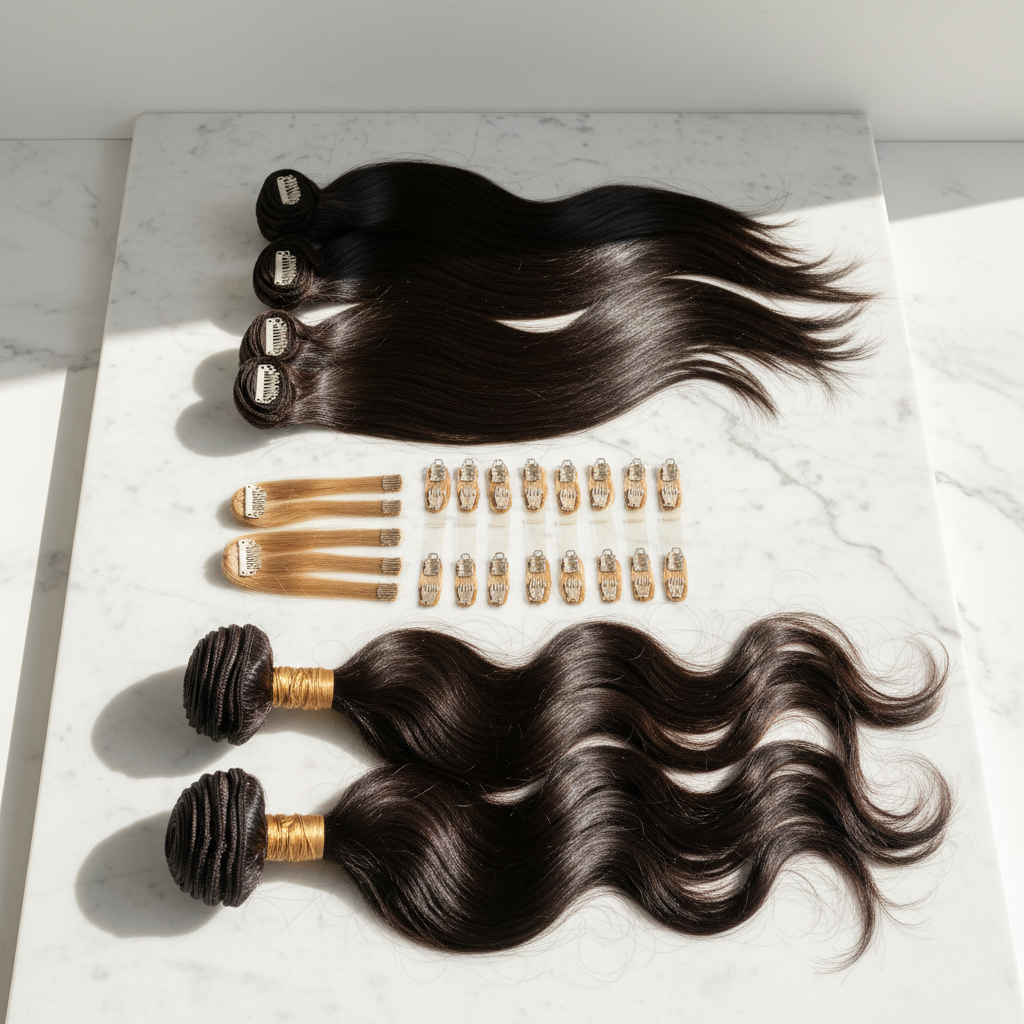
The hair extension market is vast, confusing, and — if you're not careful — expensive. This guide cuts through the noise to give you a clear framework for making the right choice the first time.
Types of Hair Extensions Explained
The type of extension determines how it's applied, how long it lasts, how much maintenance it needs, and how much it costs. Here's a complete breakdown of every major type.
Clip-In Extensions
Weft hair attached to small pressure clips. Applied in minutes at home, removed at night. Zero damage to natural hair. Best for adding length or volume for special occasions.
Tape-In Extensions
Pre-taped wefts sandwiched around small sections of natural hair. Invisible and flat against the head. Must be installed and removed by a professional stylist.
Sew-In / Weave
Hair braided into cornrows and weft hair sewn on top. Best for coarser textures and maximum longevity. Requires professional installation and regular maintenance.
Keratin / Fusion Bonds
Individual strands attached using a keratin bond melted with a heat tool. The most natural-looking option. Professional installation required; removal is a delicate process.
Halo Extensions
A single weft attached to a thin wire that sits on the crown of the head. No clips, no tape, no commitment. On and off in under 2 minutes.
Which Type Is Right for You?
For most beginners, clip-in extensions are the safest entry point — zero damage, no commitment, and immediate results. Once you understand your texture match and preferred length, tape-in or halo extensions offer a more seamless daily experience.
Our top-rated Indian hair wigs and extensions are vetted for quality across every attachment type.
View Best Indian Hair Wigs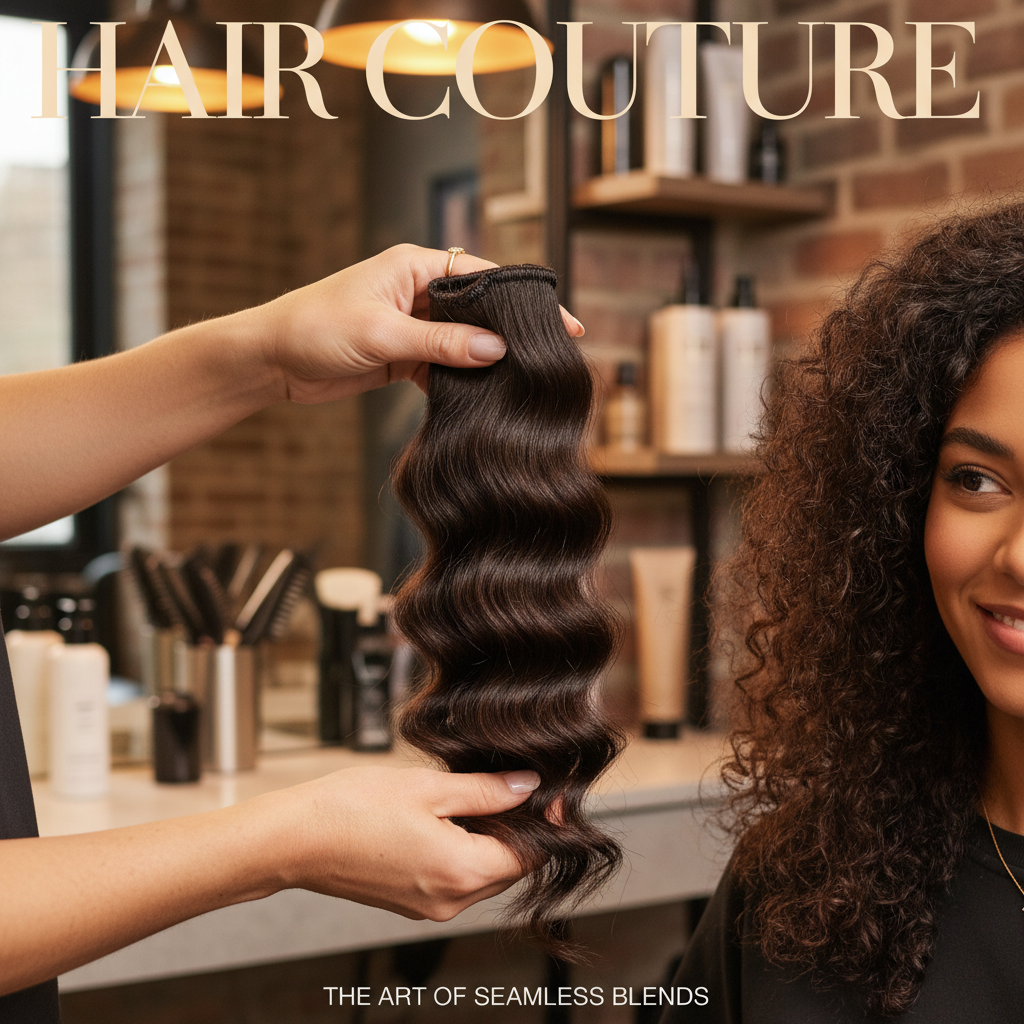
Texture, Length & Density — Getting the Match Right
Hair Texture
The most important factor in achieving a seamless blend is matching the texture of the extension to your natural hair. Indian hair is naturally available in a range of textures:
- Straight: Fine to medium strands with a natural smooth flow. Works with most hair types when straightened.
- Body Wave: A relaxed, loose S-pattern with natural movement. The most popular texture for versatility.
- Deep Wave / Curly: Tighter curl pattern. Best matched to naturally wavy or curly hair.
- Kinky Straight: Minimal wave with natural kink. Popular for blending with natural African hair textures.
Hair Length
Extension length is measured from the top of the weft or the attachment point, not where the hair ends up on your body. As a general guide:
| Length | Where It Falls | Best For |
|---|---|---|
| 10–12 inches | Chin to collarbone | Short to medium styles |
| 14–16 inches | Shoulder to chest | Classic medium length |
| 18–20 inches | Mid-chest | Most popular length |
| 22–24 inches | Bra strap to waist | Long, dramatic length |
| 26+ inches | Waist and beyond | Statement length |
Hair Density
Density refers to how thick or full the hair is. It's usually expressed as a percentage:
- 130% density: Natural, lightweight look. Ideal for those with fine natural hair.
- 150% density: The sweet spot — full but not overdone. Most popular for everyday wear.
- 180–200% density: Very full and voluminous. Best for thicker hair types or dramatic styling.

Budget Considerations
Extension pricing varies enormously based on hair quality, length, and application type. Here's how to think about it realistically.
Set Your Budget Before You Shop
The biggest mistake buyers make is starting with price as the primary filter and ending up with low-quality hair that disappoints. Start instead by identifying the type and qualityyou need — then find the best option within your budget for those criteria.
Entry Level
$50–$150
Machine-weft clip-ins, standard quality Indian hair, 14–18 inches
Ideal for: Beginners, occasional wear
Mid Range
$150–$350
Remy hair clip-ins or tape-ins, 18–22 inches, better construction
Ideal for: Regular wear, good blend quality
Premium
$350–$800+
100% Indian Remy, HD lace wigs or full bundles, 22+ inches, hand-tied
Ideal for: Daily wear, maximum longevity
Don't Forget Installation Costs
If you're choosing tape-in, keratin bond, or sew-in extensions, factor in professional installation costs — typically $100–$400 depending on your location and stylist. This is on top of the hair cost itself.
Common Mistakes to Avoid
Buying based on price alone
The cheapest hair is almost never a bargain. A $30 extension bundle that lasts 6 weeks costs more per month than a $200 Remy bundle lasting a year.
Not checking the return policy
Always buy from sellers who accept returns. Reputable Indian Remy suppliers stand behind their product quality.
Buying the wrong texture
Your extensions should match your natural hair texture when styled the same way. When in doubt, go body wave — it's the most universally adaptable.
Choosing too much length
Very long extensions are heavier and harder to blend naturally. Most women look best with extensions 4–6 inches longer than their natural hair.
Skipping the colour match
Order a colour ring sample or check the seller's colour chart carefully. Extensions that are slightly off in colour will always look unnatural.
Not reading care instructions
Even premium Remy hair can deteriorate quickly if cared for incorrectly. Read (and follow) the care guide before your first wash.
Final Buying Tips
Before you click "add to cart" on any hair extension purchase, run through this quick checklist:
- Is it 100% human hair — and ideally Indian Remy?
- Does the texture match how you plan to style your hair?
- Have you chosen the right length for your height and existing hair?
- Is the density appropriate for your natural hair thickness?
- Have you read reviews from buyers with a similar hair type?
- Does the seller have a clear return/exchange policy?
If you can answer yes to all six, you're in a strong position to make a purchase you'll genuinely be happy with. For our own vetted recommendations, see below.
We've done the research so you don't have to. Explore our top-rated Indian hair wigs and extensions — curated for every budget and hair type.
View Best Indian Hair Wigs →