A high-quality human hair wig can last anywhere from 1 to 3 years — or more. But the difference between a wig that lasts 8 months and one that lasts 3 years comes down almost entirely to how you care for it. The habits you build from day one will determine the lifespan of your investment.
In this guide, we've compiled 15 expert-backed tips across every aspect of wig care — from daily maintenance to deep cleaning, heat management, and storage. Follow these consistently and you'll get the maximum life from every wig you own.

Why Human Hair Wigs Age Prematurely
Understanding what causes premature ageing is the first step to preventing it. The most common culprits are:
- Excessive heat styling — breaks down hair's protein structure over time
- Infrequent conditioning — human hair in a wig receives no natural scalp oils
- Incorrect washing technique — scrubbing, hot water, and harsh products degrade the cuticle
- Poor storage — leaving a wig loose, tangled, or in sunlight accelerates ageing
- Sleeping while wearing — friction against a pillowcase causes significant tangling and breakage
- Over-manipulation — constant styling, touching, and handling creates cumulative damage
The good news: every single one of these is preventable with the right habits.
Daily Habits That Make a Difference
Tip 1: Remove Your Wig Before Sleeping
This is the single most impactful thing you can do for wig longevity. A wig worn to bed experiences hours of friction against a pillow, causing significant tangling, matting, frizz, and shedding. Remove it every night and store it on a wig stand. If you absolutely must sleep in it, wear a satin bonnet — but expect a shortened lifespan regardless.
Tip 2: Detangle Daily (Gently)
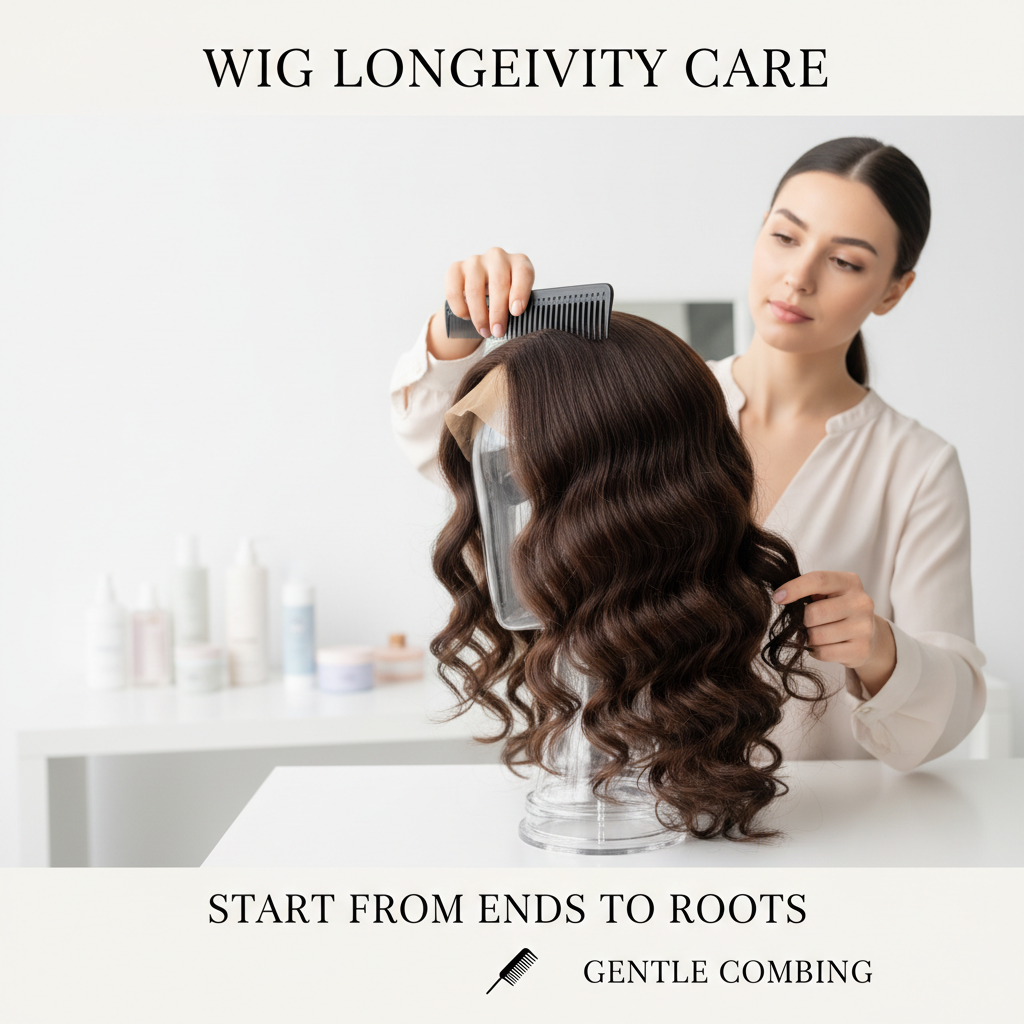
A quick, gentle detangling session before each wear prevents small tangles from becoming large ones. Use a wide-tooth comb or paddle brush, always working from ends to roots. This takes 2 minutes but saves hours of repair time later.
Tip 3: Don't Touch Your Wig Constantly
Constantly running your hands through your wig transfers oils, causes tangling, and promotes shedding. Try to leave the hair undisturbed while wearing it — treat it as you would a freshly styled blowout that you want to preserve.
Tip 4: Use a Satin Wig Cap
Wearing a satin wig cap under your wig reduces friction between the wig's inner cap and your natural hair. This protects both your wig and your own hair simultaneously.
Tip 5: Apply a Light Leave-In Conditioner or Mist
A light spray of water or leave-in conditioner before putting on your wig can refresh the hair and reduce static. Don't oversaturate — just a fine mist on the lengths and ends is sufficient.
Washing for Longevity
Tip 6: Wash on the Right Schedule
Daily wear wigs should be washed every 7–14 days. Washing too frequently strips moisture; washing too infrequently allows product and sebum buildup. Find the schedule that suits your lifestyle and stick to it.
Tip 7: Always Use Sulphate-Free Shampoo
Sulphates are the harsh detergents in regular shampoo that create lather. While they clean effectively, they also strip the hair's moisture, leading to dryness, brittleness, and ultimately breakage. Always choose a sulphate-free, moisturising formula.
Tip 8: Never Skip the Deep Conditioner
Human hair wigs receive no natural oils from a scalp. Every wash should be followed by a conditioner, and at least once a month you should use a deep conditioning hair mask, leaving it on for 20–30 minutes. This single habit has the biggest impact on maintaining softness and reducing shedding.
Tip 9: Always Use Cool or Lukewarm Water
Hot water opens the hair cuticle, causing frizz and accelerated ageing. Cool water seals the cuticle and preserves the hair's natural shine. This is a small change with a big cumulative impact.
Need the full washing step-by-step? Read our complete wig washing guide.
How to Wash a Human Hair WigManaging Heat Damage
Tip 10: Always Use a Heat Protectant
Before every single use of a heat tool, apply a heat protectant spray to the lengths and ends of the wig. This creates a protective barrier that significantly reduces heat damage. Make it a non-negotiable step in your styling routine.
Tip 11: Keep Temperatures Low
Most human hair wigs do not need temperatures above 150–180°C (300–350°F) to style effectively. Avoid the temptation to use maximum heat. Lower temperatures take slightly longer but cause far less cumulative damage over time.
Tip 12: Embrace Air Drying and Heat-Free Styling
The more days you can go without heat, the better. Braiding your wig while damp and allowing it to air dry creates beautiful waves with zero heat damage. Flexi rods, perm rods, and roller sets are all heat-free alternatives that give stunning results.

Proper Storage System
Tip 13: Invest in a Quality Wig Stand
Store every wig on a dedicated wig stand when not in use. This maintains the cap shape, allows airflow, and prevents tangles. Tossing your wig on a dresser or into a drawer is one of the fastest ways to shorten its life.
For travel, use a wig box or breathable storage bag. Many collapsible travel wig stands are available that protect wigs without taking up too much space.
Tip 14: Protect from Sunlight and Heat Sources
UV exposure causes colour fading and protein degradation. Store your wig in a cool, dark location — away from windows, radiators, and heat vents. In warmer months or bright rooms, use a dust cover or storage bag over the wig stand.
The Wig Rotation Strategy
Tip 15: Rotate Between Multiple Wigs
This is perhaps the most overlooked longevity strategy. If you have two wigs and rotate between them, each wig gets only half the daily wear — which means each one lasts twice as long. A collection of two or three wigs, worn in rotation, often works out cheaper in the long run than wearing a single wig to death every few months.
Think of it as an investment portfolio: spread your wear across multiple assets, and each one performs better over the long term.
Repairing a Declining Wig
Even with the best care, wigs age. Here are some rescue strategies before you consider replacing:
- Persistent dryness: Do a protein treatment followed by a deep moisture mask 48 hours later. This often revives dry, brittle hair.
- Mild tangling: Saturate the hair with conditioner and use a wide-tooth comb to gently work through tangles section by section while the conditioner is still in.
- Frizz: A light application of argan oil or a silicone serum can tame frizz in a wig that's still structurally sound.
- Lace lifting: Re-adhesive with proper lace bond; ensure the area is clean and dry before applying.
If the hair is irreversibly tangled from root to tip, sheds heavily regardless of conditioning, or the cap structure is compromised, it's likely time to replace rather than repair.
Essential Products for Long-Lasting Wigs
Affiliate Product Picks
- ✦ Adjustable Wig Stand with Base (2-Pack) — Store wigs properly and prevent tangling → Check on Amazon
- ✦ OGX Argan of Morocco Sulphate-Free Shampoo — Gentle cleansing without stripping → Check on Amazon
- ✦ Briogeo Deep Conditioning Hair Mask — Monthly treatment to restore moisture → Check on Amazon
- ✦ TRESemmé Heat Tamer Spray — Budget-friendly, effective heat protectant → Check on Amazon
- ✦ Moroccanoil Treatment Oil — Finishing oil for shine and frizz control → Check on Amazon
- ✦ Satin Wig Cap (Pack of 6) — Protect your hairline and reduce wig friction → Check on Amazon
Frequently Asked Questions
How can I make my wig last 3 years?
The key combination is: rotate between 2+ wigs, never sleep in your wig, deep condition monthly, minimise heat styling and always use heat protectant, wash every 7–14 days with sulphate-free shampoo, and store on a wig stand away from sunlight.
How do I stop my wig from tangling?
Detangle daily from ends to roots. Deep condition regularly. Avoid sleeping in your wig. Use cool water when washing. Reduce heat styling. Apply a light leave-in conditioner or oil to keep strands smooth and moisturised.
Does using oil on my wig help it last longer?
Yes — light oils like argan oil, jojoba oil, or a dedicated hair serum applied to lengths and ends help maintain moisture and shine. Avoid heavy oils near the lace or cap, as these can loosen knots.
Is it bad to wear your wig every day?
Not inherently — but daily wear does accelerate ageing compared to occasional wear. Compensate by following a strict care routine and considering wig rotation if budget allows.
How do I know if my wig is past saving?
If deep conditioning and detangling no longer restore softness or reduce tangling, if shedding is excessive despite gentle handling, or if the cap structure has collapsed, it's usually time to replace rather than continue investing in the wig.

Want to know exactly how long a human hair wig should last with proper care?
How Long Do Wigs Last?